












Effectiveness of Excavator Mounted Vibros for Sheet Piling:

What is sheet piling? Sheet piles are sections of sheets of Steel or PVC with interlocking edges that are driven into the ground to provide earth retention and excavation support. Vibratory hammers are usually used to install sheet piles, and Impact hammers can be used if the soil is too hard or dense.

On building projects, sheet piling is often adopted to provide temporary retention for construction of basement, while on civil projects sheet piling is commonly used for riverbank protection, seawalls, cofferdams etc.

Value of sheet piles in a project is high as they can be reused. This sets them apart from other retention/shoring techniques. Traditionally steel sheet piles have been used all across the globe, until as recent as  ……. PVC sheet piles have been introduced, which can prove to be very cost effective alternative to Steel sheets, though only if requirement is for permanent works.

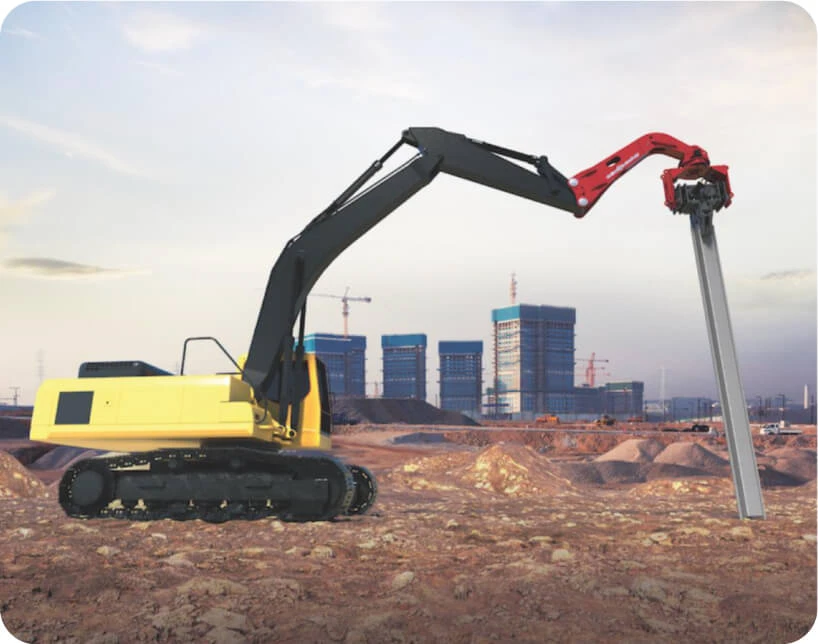
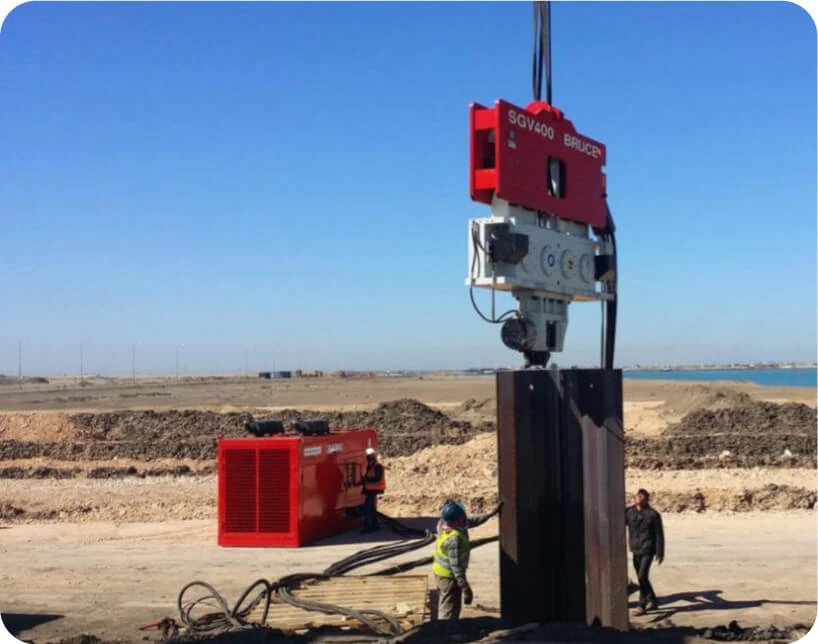
Excavator Mounted Vibratory Hammers: Vibratory hammers are highly effective for sheet pile driving in soft and granular soils. Their unique feature lies in harnessing vibrational energy through eccentric weights or hydraulic motors, creating high-frequency vibrations that reduce friction during penetration. The rapid installation in specific soil types further enhances their appeal for efficient and eco-friendly sheet pile driving, especially where minimizing environmental impact is important.

These Hammers have evolved significantly over the years and now there are variants available with tilting mechanism to hold, lift and drive sheet piles in a single operation. If you need to drive upto 8m, you can opt for a unit suitable for a 20T excavator.

Boom Adjust: Simply by adding a gooseneck andmaking a boom adjust mechanism you can increase the 20T excavators pile handling capability from 6-7m to 9-10m.  A relatively small investment provides greater capabilities to your excavator.

Vibro Boom & Gooseneck: 30T & 40T excavators can be equipped with gooseneck extensions or Vibro boom attachment to allow you to drive sheet piles upto a depth of 14-16m. Excavator mounted set ups are cheaper in both investment and operating costs. They are more popular all over the globe due to their ease and speed of operation.

Side Grip hammers: In case of space constraints, there are options of excavator mounted side grip vibro hammers. For e.g. if you need to drive sheet piles under a bridge / flyover, you cannot use a crane or a large excavator. In such a scenario, a side grip mounted on a 20T or 30T excavator can drive even up to 14m sheet piles.

PVC Sheet Piles vs Steel Sheet Piles

Why PVC sheet piles? These are the most durable synthetic pile products in the world. PVC is the material of choice where environmental factors are a concern, as they do not rot, decay, rust, or spall. PVC sheet piles are specifically designed to replace the conventional sheet piles, primarily where the retention is permanent.

Advantages of PVC sheet piling

Durable: In corrosive environments, PVC proves to be most durable, as wood rots, concrete spalls, and steel rusts. Based on independent testing and analysis, PVC walls can last 75+ years when properly designed and installed. PVC Sheet piles can be driven with vibratory hammers and do not require any other equipment.

Aesthetic: By using the many attractive colours available in sheet piles, a beautiful permanent  blends perfectly with marine applications, creating a permanent retention. Depending on the quantity, PVC sheet piles can be manufactured in customised colours as well, elevating the aesthetics of any project.

Applications of sheet piles:

  • Retaining Walls
  • Foundation Support
  • Wharf and Quay Walls
  • Bridge Abutments
  • Trench Shoring
  • Cofferdams
  • Underground Parking
  • Riverbank Stabilisation
  • Pipeline Installation  

Suretech Infrastructure Pvt Ltd  has over 30 years experience in pile driving equipment for installation of all types of temporary and permanent sheet piles and casings. With it’s vast reservoir of experience, Suretech can help you in selecting the most suitable equipment for your project along with valuable engineering solution no matter the scale or complexity of the project. Our product quality and product support are second to none in India. 

Sheet Piling: How to select the right sheet piles & driving machine?

What is sheet piling? Sheet piles are sections of sheets of Steel or PVC with interlocking edges that are driven into the ground to provide earth retention and excavation support. Vibratory hammers are usually used to install sheet piles, and Impact hammers can be used if soils are too hard/dense.

On building projects sheet piling is often adopted to provide temporary retention for construction of basement. On civil projects sheet piling is commonly used for riverbank protection, seawalls, cofferdams etc.

Value of sheet piles to a project is great dur to the ability to use and re-use them. This sets them apart from other retention/shoring techniques. PVC sheet piles are a cost effective alternative to Steel sheets if requirement is in permanent works.

Why PVC sheet piles? These are most durable synthetic pile products in the world. PVC is the material of choice when environmental factors require that sheet pile wall structures will not rot, decay, rust, or spall. PVC sheet piles are specifically designed to replace the conventional sheet piles.

Advantages of PVC sheet piling

Durable: In corrosive environments, PVC is protecting your assets as wood rots, concrete spalls, and steel rusts. Based on independent testing and analysis, PVC walls can last 75+ years when properly designed and installed. You do not need any other equipment for installation of these sheet piles. PVC Sheet piles can be driven with vibratory hammers

Attractive: By using an attractive graphite Gray colour, sheet piling blends perfectly with marine applications, while custom colour matching colours can create a million-dollar look for your project.

Applications of sheet piles:

  • Retaining Walls
  • Foundation Support
  • Wharf and Quay Walls
  • Bridge Abutments
  • Trench Shoring
  • Cofferdams
  • Underground Parking
  • Riverbank Stabilisation
  • Pipeline Installation  

Popular equipment that you can use for driving sheet piles:

Vibratory Hammers: Vibratory hammers are highly effective for sheet pile driving in soft and granular soils. Their unique feature lies in harnessing vibrational energy through eccentric weights or hydraulic motors, creating high-frequency vibrations that reduce friction during penetration. Resonance Free Vibratory hammers can be used in urban areas because of their ability to minimize soil disturbance and noise. This characteristic of RF hammers make them invaluable in urban settings or projects adhering to strict environmental regulations. The rapid installation in specific soil types further enhances their appeal for efficient and eco-friendly sheet pile driving, especially where minimizing environmental impact is important.

Vibratory Hammers can be  a. Crane suspended or b. Excavator mounted

Crane Suspended: Crane Suspended Vibro hammers are more powerful as they get their power from a dedicated powerpack and allow you to drive sheet piles to a depth of even upto 35-40m. This set up is more expensive as you will need a crane with double winch, a vibro with a powerpack and a team of crew for operation of this set up. If you need to drive sheet piles deeper and in hard soils, this is the set up you need to choose.

Excavator Mounted: These Hammers have evolved drastically over the years and now you can get the one with tilting mechanism to hold, lift and drive sheet piles in a single operation. If you need to drive upto 8m, you can opt for a unit suitable for a 20T excavator. 30T & 40T excavators with gooseneck extensions or Vibro boom attachment can allow you to drive sheet piles upto a depth of 14-16m. Excavator mounted set ups are cheaper in both investment and operating costs. They are more popular all over the globe due to their ease and speed of operation.

Side Grip hammers: You can opt for excavator mounted side grip vibro hammers if you have space constraints. For e.g. if you need to drive sheet piles under a bridge / flyover, you cannot use a crane of a large excavator. Here you can use a side grip mounted on a 20T or 30T excavator to drive even upto 14m sheet piles.

Impact Hammers: Impact hammers are characterized by a striking mechanism where ram weight of the hammer drops on the sheet piles with gravity. It is pulled up with hydraulic force and dropped repeatedly with concentrated impact energy  driving the sheets into the ground. Their key feature lies in high driving efficiency, making them suitable for a harder soil conditions. The robust construction and adaptability of impact hammers contribute to their reliability in diverse construction scenarios. Whether facing challenging ground conditions or requiring versatility in soil types, impact hammers emerge as an effective and dependable solution for sheet pile driving. Impact hammers are also useful if you need to drive deeper sheet piles.

Impact hammers can be Hydraulic, Pneumatic or Diesel. However, diesel hammers are no longer preferred due to their high pollution and pneumatic hammers are not as powerful or efficient as their hydraulic counterparts.

Hydraulic Pile Pressing machines:  Also known as silent piler or still worker, these machines use reactionary force to press the sheet piles silently without any noise or vibrations. The most expensive set up of all, these equipment are used wherever environmental disturbances are prohibited like in eco sensitive marine areas, dense urban locations etc.

Suretech Infrastructure Pvt Ltd have specialised in pile driving equipment for over 30 years, for installing all types of temporary and permanent sheet piles & casings.  Suretech has a wealth of experience in helping you to select the equipment most suitable for your project & value engineered solution no matter the scale or complexity of the project. Our product quality and product support are second to none in India.
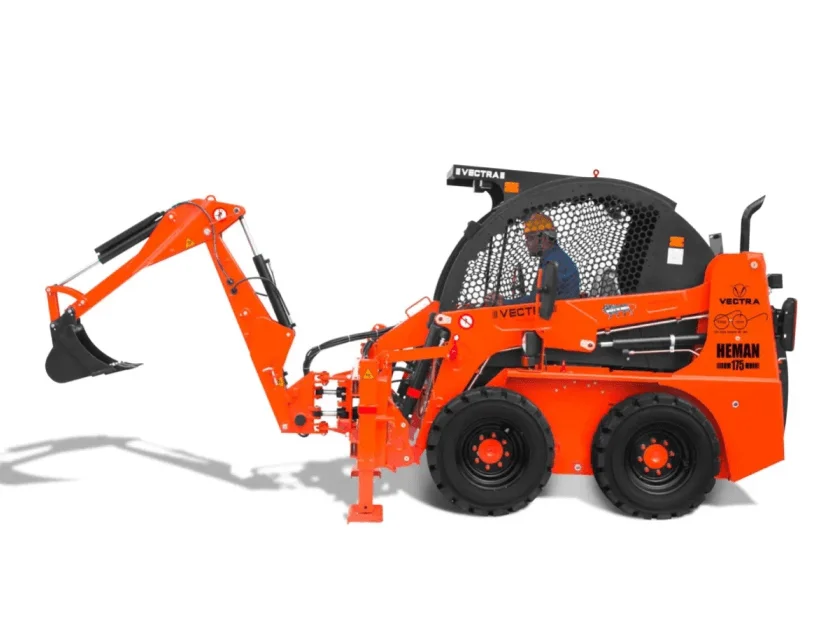
Can You Dig It? Backhoe Attachments for your Skids

Its flexibility in tight corners. The fact that one person can perform in minutes the jobs that could take hours using manual labour. Attachment that makes your skids versatile — getting ability of digging, loading and trenching to backfilling and demolition.

Backhoe attachments offer powerful digging performance in a compact design. Vert’s backhoe attachment adds ease to accessing of confined spaces. Backhoes can be used for various jobsite activities — digging foundations, planting trees, trenching for irrigation and utilities installation and much more.

Skid loaders are multi-use machines. The applications are nearly limitless. Attachments are what make these loaders versatile. They can landscape, fill and grade parking lots and run trenches for sewer lines — with the help of a backhoe. They can work on retaining walls, fences, water features — you name it. Plus, they can work in tight spots other machines can’t reach. The skid loader’s light footprint allows the machine to go almost anywhere without damaging turf.

Cost Advantage

Skid loaders are growing in popularity because contractors are looking for cost-effective ways to accomplish several jobs without having to invest in multiple pieces of equipment. Contractors are buying Skid loaders to do jobs they once used dedicated machines to accomplish. In the past, a trenching contractor would have to bring a trencher to the job and another machine to fill the trench. With a skid loader, he can use one machine with a trencher attachment and a trencher filler attachment to accomplish that same job. This approach not only saves the contractor the cost of an extra machine, it also may reduce insurance and travel expenses.

Routine Maintenance

Now, how can we extend the life of the skid loader’s backhoe attachment? Routine maintenance can spell the difference between a productive attachment and an unexpected breakdown. Maintenance and repair costs are minimal compared to the work you can accomplish with a well-maintained piece of equipment.

Although backhoe attachments are commonly used in for only few hours a day, it’s typical for some components to experience wear with use over time. The following routine maintenance tips can help extend their life and ensure optimal performance:

  • Check bucket teeth. Operators should be routinely looking at bucket teeth to make sure they are sharp and square edged — not rounded from wear.
  • Grease pivot points daily. Because the compact utility loader is so powerful, it builds up a lot of pressure or “torque.” Pivot points should be greased on a daily basis to ensure the backhoe is working freely.
  • Examine all hydraulics. Another way to ensure backhoes don’t lose performance is to check that there are no hydraulic leaks, hoses are not rubbed or damaged and cylinders and hydraulic hoses are not damaged.
  • Look at pin-to-boom relationship. Are the pins inside the boom assembly stable? This is the highest wear point as it receives the most pressure when digging. There should be no movement between the bucket and pins. Are new pins or bushings needed? The bucket may be loose after a couple hours of use. In the case of Toro’s backhoe attachment, the boom has the ability to pivot 90 degrees each way from the operator, so it’s important to grease and check it for wear.

Safety Check

Operator safety precautions are at least as important as routine maintenance. For example, when hooking up the backhoe attachment to the loader, make sure the locking pins on the attachment plate are securing into the opening on the backhoe plate. If the brackets aren’t secure, the backhoe will be unstable. So, it’s important to replace any worn parts.

Additionally, make sure stabilizers are on secure ground so you don’t lose stability of the unit, which anchors the backhoe. Jobsite safety should also be top of mind. This includes: checking for underground power lines; watching the overhead height of the backhoe; and remembering not to get too close to the trench — leaving a safe space between the backhoe and opening to prevent a cave-in.

Operating the backhoe attachment without taking the time for proper setup and upkeep can result in expensive, long-term implications. By following a few simple procedures with each use, you can significantly reduce repair and downtime, allowing your backhoe to work for you over the long haul.

Consult #Dr.Digger if you are uncertain about using the attachment. To attain optimal performance and long life from the attachment, your best bet is to use genuine OEM spares

Call 1800 120 7873 sales@suretech.co.in www.suretechinfra.com ​

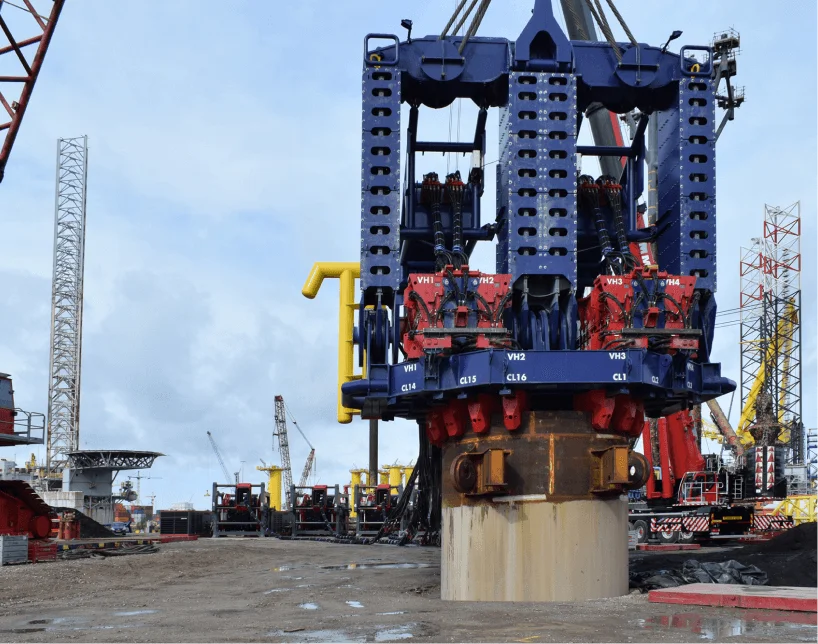
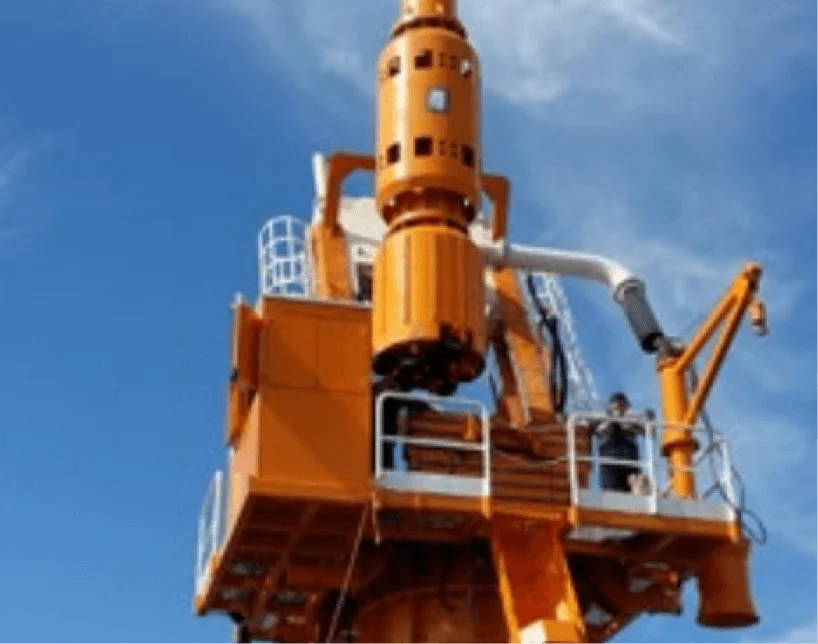
PVE GIANT 2000 Upending Vibro

Vibratory Hammer for offshore renewable energy foundations

With dimensions of approximately 10 x 10 x 10 meters and a weight of 425 tons, this is the biggest vibratory hammer in the world.

  • World’s biggest Upending Vibro for XXL-monopiles
  • offshore wind applications
  • Installation & decommissioning

This GIANT 2000 Upending Vibratory Hammer is the result of our sustainable ambitions and will enable Dieseko Group to further execute its strategy to install or decommission XXL piles offshore in a fast, safe and silent way.

You are completely overwhelmed when you see this offshore machine for the first time. So big. So innovative. With dimensions of approximately 10 x 10 x 10 meters and a weight of 425 tons, this is the biggest vibratory hammer in the world. The four double gearboxes provide 2000 kgm Eccentric Moment and 43,000 kN of centrifugal force per up-and-down movement. And that in a frequency of 23 times per second.

The GIANT 2000 is developed in close partnership with offshore experts and has lots of innovative details underneath the unique design. The modular concept can be adapted to different pile diameters, to the weight of the pile, and even the number of gearboxes for the eccentric moment can vary

“This revolutionary Upending Vibratory Hammer is the most environmental-friendly and the most efficient way of piling in offshore”

Specifications in this configuration

Max. amplitude incl. clamps 12,7 mm

Max. static line-pull 19600 kN

Max. hydraulic power 7483/10178 kW/HP

Dynamic weight including clamps 422 ton

Dieseko, a leader in foundation equipment brings to us silent piling option. Environment friendly yet powerful. Call #DrDigger #FoundationSpecialists since 1990 on 1800 120 7873 sales@suretech.co.in www.suretech.co.in

Simex: Asphalt Granulator for road recycling

Road recycling traditionally covers a lot of areas and many different types of machines, from soil stabilisers to pavement planers. Whether its road profiling, reclaiming, milling or planning, the machines are getting better

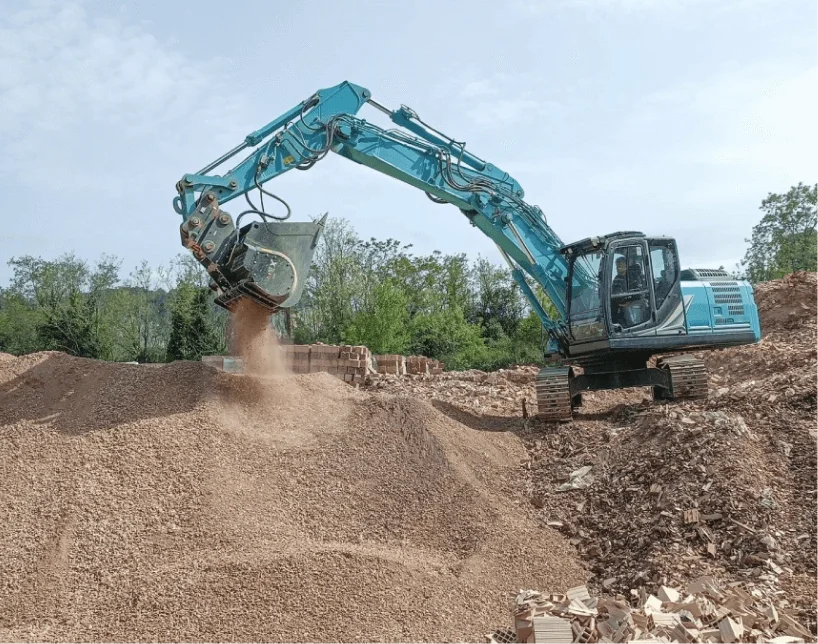
Recycling is about reusing the road material just milled from the road surface. The new CBA asphalt granulator bucket from Simex, is ideal for recovering milled asphalt material or RAP — recycled asphalt pavement. It reduces asphalt slabs to certifiable grain size thanks to the configurable rear grid. CBA bucket has the dual advantage of combining reduced construction site costs — less supply of new raw materials — while at the same time offers the possibility of reintroducing the milled material into the production cycle of new asphalt.

Simex’s R&D department has combined the concept of milling drums with rotor crusher bucket technology, creating the three-models of CBA asphalt granulator bucket range: CBA 20, CBA 30 and CBA 40 for 12–40tonne excavators. The equipment features a cylindrical drum of asymmetric teeth driven by large displacement radial piston hydraulic motors in direct drive. The rear grid determines the grain size of the material output. It is available in several configurations to meet the regulations covering milled material in varying countries.

CBA asphalt granulator buckets aim to ensure broad autonomy for operators engaged daily in road maintenance works, crushing aggregates and filling excavations for laying underground utilities. Cutting down the time and costs related to transport and minimising the purchase of new raw materials means optimising your site’s logistical and economic dynamics while reducing environmental impact by recovering materials considered a reusable resource rather than waste.

#Dr. Digger is your trusted friend when it comes to advise on what equipment to buy? Call 1800 120 7873 sales@suretech.co.in www.suretechinfra.com ​

Transforming the way U use your machines

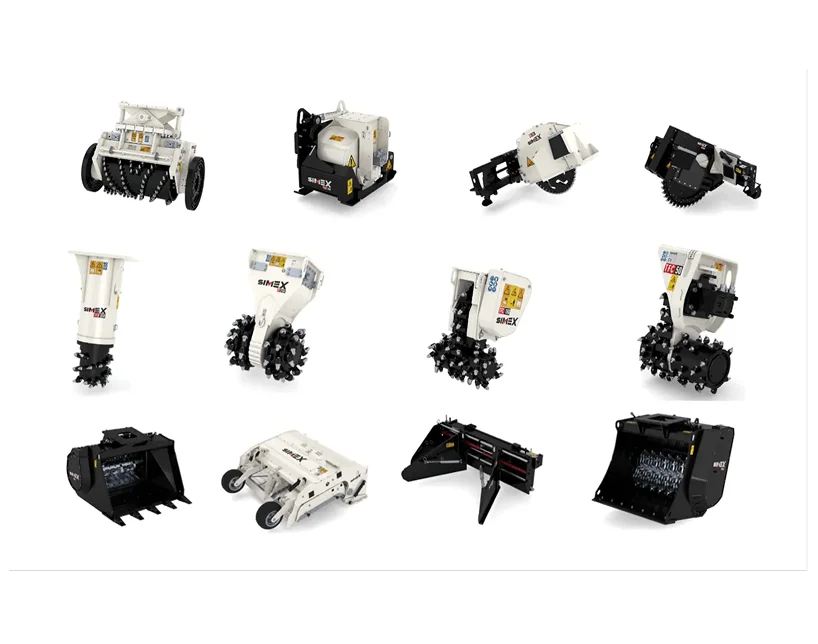
High performing excavator & skid attachments from SIMEX

Simex is the largest producer of hydraulic attachments in the world. They are OEM suppliers to several equipment manufacturers. Simex is known for high quality high performance attachments. For precision and control in road repair, trenching and quarrying applications, Simex’s range of attachments are designed for accuracy and reliability

It’s not just your machinery that needs to last the distance, but your attachments as well. Simex hydraulic excavator and skid steer attachments have been designed and engineered for a wide range of applications, including demolition, road construction, trenching, quarrying, recycling and forestry. Simex product range includes the smallest path-laying projects to large-scale rock grinding, with precision.

Road construction & maintenance

Simex self-levelling road planers and stabilisers are designed for removing an entire layer of asphalt or cement in preparation for trenching, or for milling deteriorated road sections for resurfacing. Planers can be very effective for patch repairs on both asphalt and concrete roads.

With Simex planers you can maintain constant milling depth in any condition regardless of the ground contour, as lateral slides on the planer automatically align to the milling surface. Both slides move independently, providing greater stability and more precise milling movements as well as reducing material overflows. Dust is also controlled through a built-in water tank and spray system.

The PL range of planers can be used on skid steers, hydrostatic drive loaders and backhoe loaders. With the option of using multi tooth special drums the operator can

  • Remove horizontal road markings
  • Perform road scarifying
  • Mill concrete or asphalt surface

Maintenance costs are kept to a minimum, since the only requirement is the replacement of worn teeth.

PL planers are available in a range of models that run from the PL 25.10 with a 250mm width and 70mm maximum depth, through to the PL 40.35 with a width of 1,200mm and depth of 350mm. Covering a range of standard, high flow, milling and high depth planers, this range is suitable for small to medium-sized roadworks and is particularly useful for precision work around potholes and kerbs.

Various drums and teeth layouts are available for asphalt or concrete, as well as a multi-tooth drum for fine surface milling.

Simex’s self-levelling PLB/PHD planers are designed for excavators to work on horizontal, vertical or sloped surfaces, and are perfect for surfaces with side-by-side passes. The PLB/PHD standard drum range extends from the 200mm PLB200 with a maximum depth of 70mm through to the 450mm PLB450N, which has a maximum depth of 150mm. With special drums, a maximum depth of 450mm can be achieved.

Simex planers are very compact compared to whatever else is on the market, so they can get into tighter areas and work closer to obstructions. There’s also a built-in water tank and spray system, which means you don’t have to put a water tank on the roof and run hoses. They have independent left and right depth control for greater precision.

“Customers claim that these are the best planers they’ve ever used.”

In addition to the above, Simex also offers the ST200 asphalt float for skid steers, backhoe loaders and front end loaders. The ST200 has been designed for applications such as laying asphalt on footpaths and utility trenches, sealing road shoulders or widening existing roadways.

Trenching and compaction

Alongside the planer range, Simex also manufactures a variety of attachments for more niche markets.

For example, the Simex T/TA range of trenching wheels is designed for small fixed-section trenching, cutting and micro-trenching and the Simex wheel saws can cut concrete, asphalt or rock up to a maximum depth of 800mm and a width of 250mm.

The range runs from the T200, with a maximum 200mm cutting depth, through to the T800, which has a 800mm cutting depth and can work in reverse. The T450, T600 and T800 models come with hydraulic depth adjustment, while the T450 and T600 also come with an optional trench clearing device.

The wheel saws feature wheel protection at any working depth, ensuring maximum safety of operators and property. Other options for various models include a water spray for dust control, a conveyor belt for loading of material into a bucket and the ability to aspirate excavated material for a vacuum truck.

For compacting trench bottoms, Simex also offers vibrating compaction wheels for skid steers, front end loaders and five to 12-ton (4.5 to 10.9-tonne) excavators.

These wheels can be quickly changed on site, with widths extending from 150mm to 400mm and a maximum depth of 700mm. The rotation device can be mounted to allow for compaction in any position to reach difficult spots. With the reverse-rotation vibrating twin shaft positioned at the centre of the wheel, this increases operator comfort.

Rock Cutting / Profiling

When conventional digging systems are too weak and percussion tools have little effect, Simex twin header rock cutter heads are designed for trench work in hard and compacted ground.

With different cutter drum options and tools with different features, Simex twin headers are suitable for milling, concrete and rock wall profiling, dredging, demolition and quarry work. They can be used in deep and narrow trenches, as well as for underwater work.

The rock cutter heads come in a range of models for excavators between 2.5 and 75 tonnes, running from the 40 horsepower (30kW) TF200 with a 25.1kN cutting force to the 250hp (185kW) TF3100 with a 128kN cutting force.

Crushing & Recycling

Simex has also developed a range of crusher buckets for excavators and skid steers, for onsite crushing of materials such as bricks and concrete. CBA series of crusher buckets are designed specifically for crushing old compacted Asphalt. CB & CBE series are designed for crushing of construction and demolition waste.

Screening buckets are available for excavators of 2T — 50T and for all models of Skid Steers. These screening buckets have high accuracy & high productivity. Able to screen even material with high moisture content and patented control system to adjust the screening size hydraulically from within the cabin.

These attachments suitable for mini excavators and skids are able to do small jobs, roadside crushing and screening. Screening buckets can also screen topsoil, mulch and other materials used in landscaping operations.

#Dr.Digger is your trusted friend when it comes to advise on what equipment to buy. Call 1800 120 7873 sales@suretech.co.in www.suretechinfra.com, ​

Transforming the way U use your machines

What is a RCD? (Reverse Circulation Drill)

Reverse Circulation Drilling (RCD) system, also known as air-lift is that compressed air is injected into the drill pipe below water level just above the drill bit. This reduces the density of internal water column and starts circulation. The mixture of water, air and cuttings are then flushed out through the drill pipe into the settling tanks

BUMA drilling systems are designed to maximize production rates through hard rock. Productive drilling occurs when the majority of the time spent on-site is devoted to actually drilling and not in machine set up. BUMA RCD’s do just that.

BUMA ‘Reverse Circulation’ drilling involves the supply of air down through the drill-string to decrease the ‘effective density’ of the water in the centre of the drill-string. Operating much like an ‘air-lift’, the drilling spoils are carried out of the hole through this rising column lower-density air/water mixture (see Figure). Reverse Circulation requires that the outer annular area of the casing be kept full of water in order to provide the hydraulic head required to effectively ‘push’ the central column of air/water/spoils up and out of the hole through the central pipe of the drill-string.

Most common applications of RCD

  • Rock drilling
  • Rock socketing
  • Underreaming
  • Bell-out of the rock socket
  • Pile cutting
  • Milling of deformed casings
  • Anchor drilling
  • Secant wall drilling

Reverse Circulation is an effective drilling technique for a wide range of pile diameters including very large piles of even 3m diameter and larger. It is also effective for very deep holes, and holes drilled into hard-rock. Working with RCD Rigs is highly efficient, safe and environmentally friendly solution for drilling large diameters and depths. If you fall into one of the following conditions, RCD is the best Solution to deal with it.

  1. Large Diameter (Larger than 800 mm)
  2. Deep Depth (Deeper than 50 m)
  3. Hard Rock Drilling ( ~ 350 MPa)
  4. Bore Piling in Marine Condition.

Reverse Circulation is able to control/direct the drilling spoils by simply directing the discharge pipe to the desired site location or even to a dedicated barge (for environmentally sensitive, overwater applications). This cannot be accomplished with direct circulation which allows water and cuttings to spill out of the top of the pile.

BUMA RCD drills represent the most ruggedly designed and extensively field-tested all-purpose drills in the foundation industry. BUMA is known for Reliable & Powerful RCD’s most suitable for large dia Rock drilling for Marine structures viz jetties, berths, dry docks, bridges & piers. There is simply no better choice for foundation contractors than a BUMA Reverse Circulation drill.

BUMA RCD’s have been successfully used at Bandra-Worli Sea Link, Mumbai Trans-Harbour Link and currently being used on Versova Bandra Sea Link.

MTHL: Daewoo-TPL JV, has successfully used BUMA RCD’s in MTHL project. The piling job completed last year and DAEWOO –TPL has done 840 nos. of 2m dia piles using 6 BUMA RCD’s. Drilling depth was upto 35mtr at a drilling speed of 500mm per hour. Also, for the first time in India, 3m dia piles successfully completed using a RCD in INDIA. This was achieved using BUMA RCD model BM 3030. 8 nos piles having depth of 30m completed successfully at a drilling rate of 400mm per hour.

In terms of the deepest drilling depths in BUMA records, some examples are: The deepest drilling depth recorded in South Korea was during the construction of Incheon Bridge, reaching 80 meters. In the United States, the KYTC Kennedy Mill Bridge Replacement project achieved a drilling depth of 90 meters. Lastly, for the Hong Kong project, the excavation reached a depth of 127 meters.

On The Greater Male’ Connectivity — Male’ to Thilafushi Link Project in Maldives, AFCONS has immense pleasure to inform that their team has successfully completed concreting of one of the deepest piles in the Project which was bored using BUMA RCD. Afcons is also confident of it being the World’s deepest cast-in-situ Pile Foundation.

#BUMA is known for Reliable & Powerful #RCD for large dia drilling for Marine structures-jetties, berths, dry docks, bridges & piers. Backed by unmatched SURETECH SUPPORT.

Call #FoundationSpecialists 1800 120 7873 sales@suretech.co.in www.suretech.co.in #SuretechInfra #marinejobs

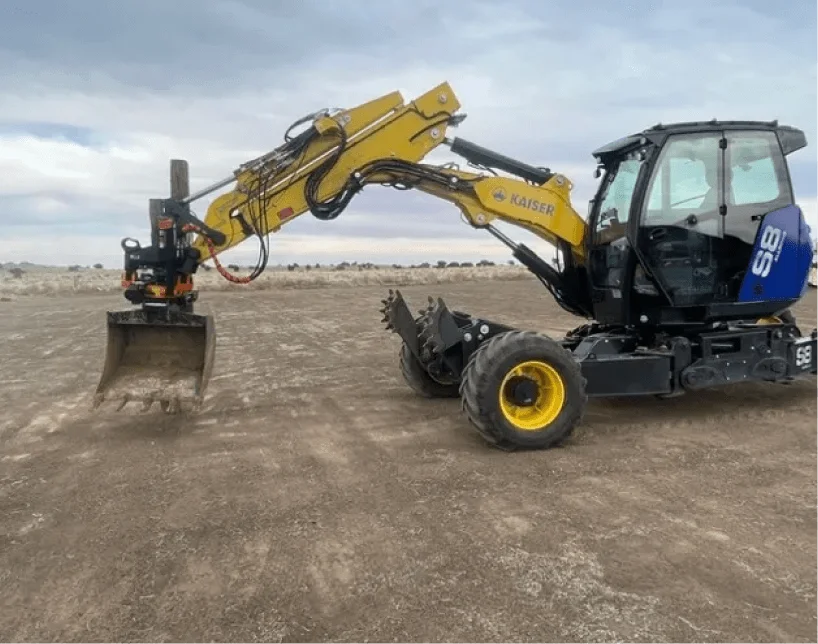
Getting a Tiltrotator System for Your Excavator

Tiltrotators have revolutionized the way construction and excavation projects are carried out. These innovative attachments provide enhanced flexibility, precision and efficiency — making them indispensable tools for modern day jobsites.

Tiltrotators are hydraulic attachments that are mounted between the excavator arm and bucket. They provide two additional hydraulic functions: rotation and tilting. This unique combination enables the operator to tilt the attachment 40 degrees side to side and rotate it a continuous 360 degrees, greatly expanding the machine’s capabilities. There are several benefits to using a tiltrotator, the main ones being:

  1. Increased Versatility: Tiltrotators enable excavators to work more efficiently in tight spaces and complex terrain. They allow for precise positioning of the bucket, making it easier to tackle a variety of tasks — from digging and grading to trenching and landscaping.
  2. Enhanced Productivity: By eliminating the need for constant repositioning of the excavator, tiltrotators streamline workflows and reduce downtime. Operators can complete tasks faster and with greater accuracy.
  3. Improved Safety: Tiltrotators reduce the need for manual labour and manual handling of materials, minimizing the risk of accidents and injuries. Their intuitive controls and advanced features enhance operator comfort and confidence.
  4. Cost Savings: Despite high initial investment, tiltrotators offer significant long-term cost savings. Their versatility and efficiency results in faster project completion times, lower fuel consumption and reduced wear and tear on excavator components, ultimately resulting in lower operating costs.

Choosing the appropriate tiltrotator for your specific needs requires careful consideration of several factors:

1. Compatibility: Ensure that the tiltrotator model is compatible with your excavator. Consider factors such as weight capacity, hydraulic flow requirements and mounting configuration to ensure seamless integration with your machine.

2. Attachment Options: Evaluate the range of attachments and accessories compatible with the tiltrotator. Look for features such as quick-couplers and interchangeable tools that enhance versatility and efficiency on the jobsite.

3. Control System: Assess the control system of the tiltrotator, including the interface and functionality. Opt for intuitive controls and ergonomic design features that simplify operation and reduce operator fatigue.

4. Durability and Reliability: Invest in a tiltrotator built to withstand the rigors of daily use in demanding environments. Look for durable construction, high-quality materials and reliable hydraulic components.

5. After-Sales Support: Choose a reputable supplier / dealer who knows the product and offers comprehensive after-sales support, including warranty coverage, technical assistance and spare parts availability.

Tiltrotators continue to emerge as invaluable tools for construction and excavation projects, offering unparalleled versatility, efficiency and productivity. Whether tackling complex landscaping projects or navigating tight urban spaces, tiltrotators empower operators to overcome challenges and unlock new opportunities for success.

#Dr.Digger is your trusted friend when it comes to advise on what equipment to buy? Call 1800 120 7873 sales@suretech.co.in www.suretechinfra.com ​

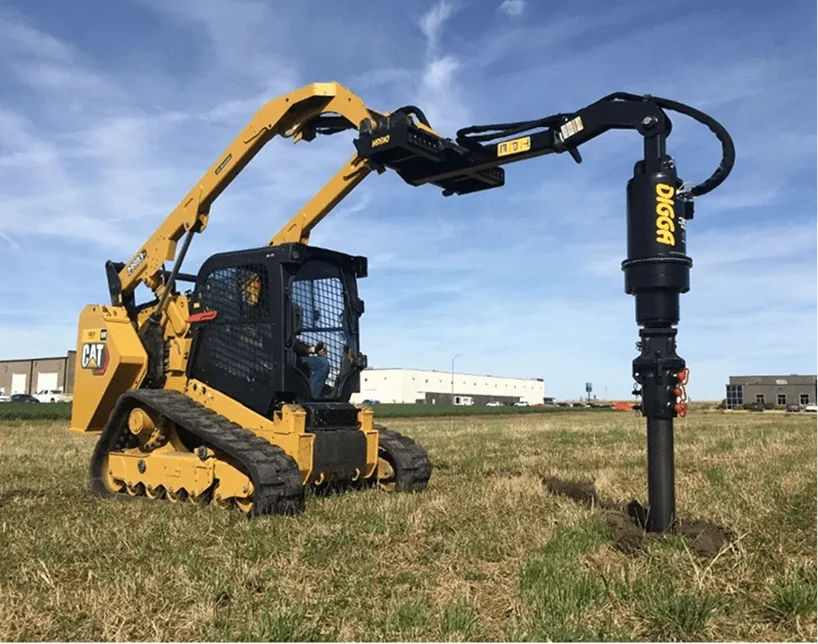
Selecting the Right Auger for Your Skid

An ideal match between tool and machine optimizes performance and efficiency. Stray too far to one side or the other, and you risk hurting not only your bottom line but also your skid. When it comes to selecting the right auger for your project, it’s important to know your carrier and your project. Here are some tips to get the right auger.

Know What You’re Digging Into

Before you start selecting augers check the soil condition of your work site. Every job is different and knowing the general characteristics of the soil and strata will help you select the best auger for your intended use.

Do you have sandy soil or you are dealing with clay, black cotton soil or rocky conditions? Augers with a classic-drive system provide productive torque ratios at any rpm. This simple design provides fast, deep holes in tough soil conditions including clay, small rocks and frozen ground. Fewer moving parts and easy maintenance combine for a low total cost of ownership.

For more challenging digging conditions, including shale, rocky soil, layers of frost, heavy clay, etc., a planetary drive that maximizes torque and power will be a better long-term investment. It’s also recommended to look for an auger model with self-aligning vertical accuracy or opt for patented Digga Halo system which guides you from straying away.

Understand Your Carrier

Once you know what kind of drilling power you’ll need, it’s time to check your skid loader. You’ll need to check the machine’s hydraulic flow, carrier capacity and overall weight of your setup as it determines potential downforce. You also need to check your carrier’s lift height to ensure enough clearance is available for the auger and bit or you need arm extensions to complete your project.

There are helpful online tools, like the Fit Finder from Ignite Attachments, that can remove a lot of the guesswork. These are powered by tens of thousands of data collected from equipment manuals across a wide range of brands. Simply enter your make and model, and the tool provides the right attachment to maximize your capabilities. Or you can simply call Dr.Digger on 1800 120 7873

Accessorize

Once you’ve determined the right auger drive unit for your carrier and your general soil profile, it’s time to consider additional tools you’ll need to get the job done. Think about how big you need your hole to be and how deep.

Auger tools come in a range of diameters. The exact size you need will depend on the job at hand, but a general rule of thumb is to size up your tool. For example, if you need to instal a 150mm post, you will need to drill at least a 180mm hole.

Additionally, you may need an extension if you’re looking to drill deeper. The standard depth for most augers is 2000mm but with an extension you can even drill upto 4000mm

Always Set the Quality Bar High

You get what you pay for with augers, just like any other attachment. To make the most of your investment, look beyond the initial price. Work with reputable manufacturers like Digga that deliver both quality and service. Features like connect-under-pressure couplers not only make hooking up easy, but they’re also made to stand up to harsh treatment. When it comes to securing the best ROI for yourself or your business, make sure to give overall quality as much consideration as the final price.

Digga augers are specially designed for Skid Steer Loaders, Backhoes & Excavatorsfor drilling in asphalt, concrete and also rock. Most rugged and powerful drilling tools in the world. Call #DrDigger 1800 120 7873 sales@suretech.co.in www.suretechinfra.com ​ #AttachmentSpecialists​

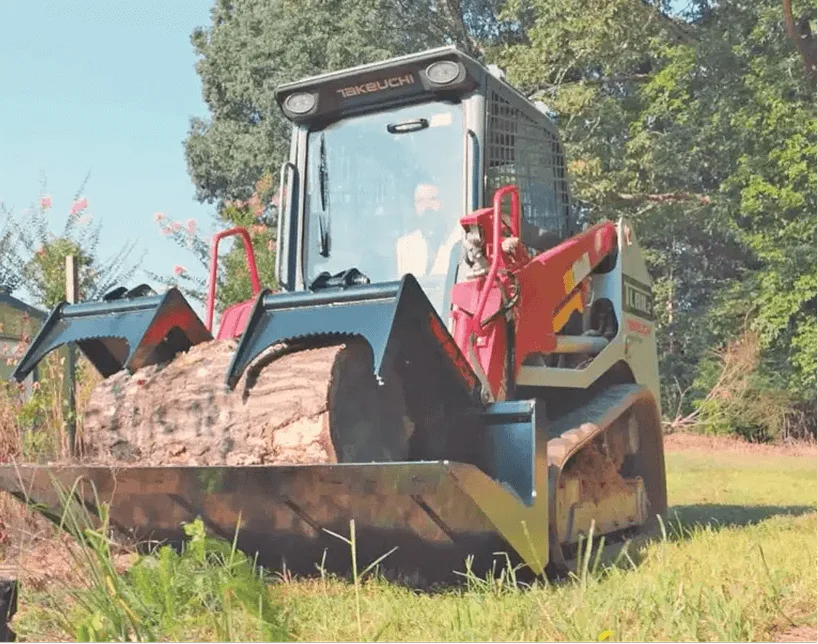
Selecting the right Grapple Attachments for Skid Steers

Whether you’re moving rocks, logs or debris, there’s a grapple for any job. These hard-working attachments are designed to assist operators in picking and placing materials of all kinds with ease. However, It’s important to find the right style and size of grapple for your needs.

As with any attachment, grapple selection will depend on your application and your machine’s compatibility and capabilities. Knowing the size and type of material you’ll be handling is key in finding the right tool for the job. Since there are many different grapple it is important to understand which will be best for you.

If you’re handling loose materials like rocks, brush or debris, a root grapple is a good choice.

A bucket grapple combines the functionality of a bucket and a grapple, making it particularly versatile.

A rock grapple will help you handle larger rocks and heavier debris.

You will need to ensure that the grapple attachment is of correct sized to suit your skid steer loader. Consider the grapple’s weight, capacity and whether it can handle the materials you’ll be working with. Check the grapple’s hydraulic flow requirements and ensure that your skid steer loader can provide the necessary hydraulic power.

Grapples work in tough conditions handling all sorts of materials, so durability is especially important. Customers should consider the grapple’s steel thickness and yield strength. Operators need a strong attachment capable of handling materials, so the ideal grapple is made from durable materials such as high-strength steel for longevity and reliability.

If you’re considering a grapple with tines, the number of tines can impact the attachment’s ability to grip and secure materials. Consider the shape and design of the grapple’s tines or jaws as well. Some are curved for better gripping, while others may have serrated edges for improved traction.

While it might seem that a heavier attachment equals more durability, that isn’t always the case. Keep in mind that a heavier attachment can reduce your lifting capacity. Rigorous testing and smart engineering results in a balance between weight and strength by reserving more of the carrier’s rated operating capacity for lifting and transporting heavy materials.

Customer service and support after the sale are very important. Buyers should understand the grapple’s warranty and what’s all covered by the manufacturer. The availability of parts is another concern. Looking at maintenance, it’s best to select a grapple that offers easy upkeep and supported by a local dealer.

Fit Finder of Ignite Attachments offers a free, online tool that can help you quickly and easily identify the attachments that match your existing equipment. It is backed by over 10,000 specifications analysed to determine compatibility across most makes and models of skid steer loaders and mini excavators from all major manufacturers.

Grapple Types

General Utility Grapples: General utility grapples are suitable for light construction work and residential projects. These versatile grapples are popular due to their ability to handle a lot of different debris — from moving hay bales, as well as smaller rocks and logs. They’re also ideal for loading and unloading pallets.

Rock Grapples

This type of grapple is a dependable option for sifting and lifting rocks to clear sites with ease. A rock grapple sifts material with closely placed teeth, typically between 2 to 4 in. apart, leaving soil behind. With serrated edges made to scoop and clear rocks, rock grapples make it easy to keep up pastures and clear construction sites.

Industrial Grapple Buckets

Industrial grapple buckets are made to withstand the toughest, most demanding commercial jobs. Industrial grapple buckets are built with thicker, high-yield-strength steel and often have a much taller jaw opening to haul more material per load. Operators can choose between 60-, 66-, 72-, 78-, 84- and 90-in. widths.

Hardscape Grapples

Operators can handle bulky, heavy materials such as concrete, stone, bricks, pavers and other hard materials easily with a hardscape grapple. Some hardscape grapples may include features such as rubberized or padded grips to protect the surfaces of hardscape materials during handling, reducing the risk of damage.

Root Grapples

Working in forestry or land management applications? A root grapple may be for you. This attachment is a single-jaw grapple used for digging, raking, piling and loading debris.

Root grapples boast a superior clamping force to lift and move trees, logs, brush, stumps and other debris. They feature an open bottom that allows dirt to fall through, with slightly wider set teeth, typically 5 to 8 in. that are used to dig out roots, stumps and sift material. Root grapples are perfect for penetrating the ground, ripping up roots and leaving a clear surface behind.

Log Grapples

Safely transport logs and pipes with log or pipe grapples. These grapples apply even pressure to the load they’re carrying and are typically available in 48- to 72-in. widths.

Log grapples efficiently handle, lift and transport logs and timber. These grapples typically feature sturdy jaws or tines that can securely grip logs of different diameters. The design may include a wide opening for handling multiple logs simultaneously.

Log grapples are particularly popular in land clearing and site preparation tasks thanks to their ability to remove trees, logs and other debris and haul them onto trucks and processing equipment. The oil and utility industries are also using these durable grapples to haul mats.

Scrap Grapples

Need to securely capture and haul debris away? Scrap or solid bottom grapples are a great choice. These grapples excel in yard waste removal, demolition, recycling and scrap applications.

Beyond a Grapple

4-in-1 Bucket and 4-in-1 Power Rake can provide similar use as a grapple, but their benefits goes beyond that. They can be used as a bucket, grader blade, dozer blade and high dump bucket. The patented 4-in-1 Power Rake can also be used to leave almost any ground prepared and ready for a seed bed.